

From Subsistence to Success: Bhagirathi Rana’s Journey to Climate-Smart Agripreneurship
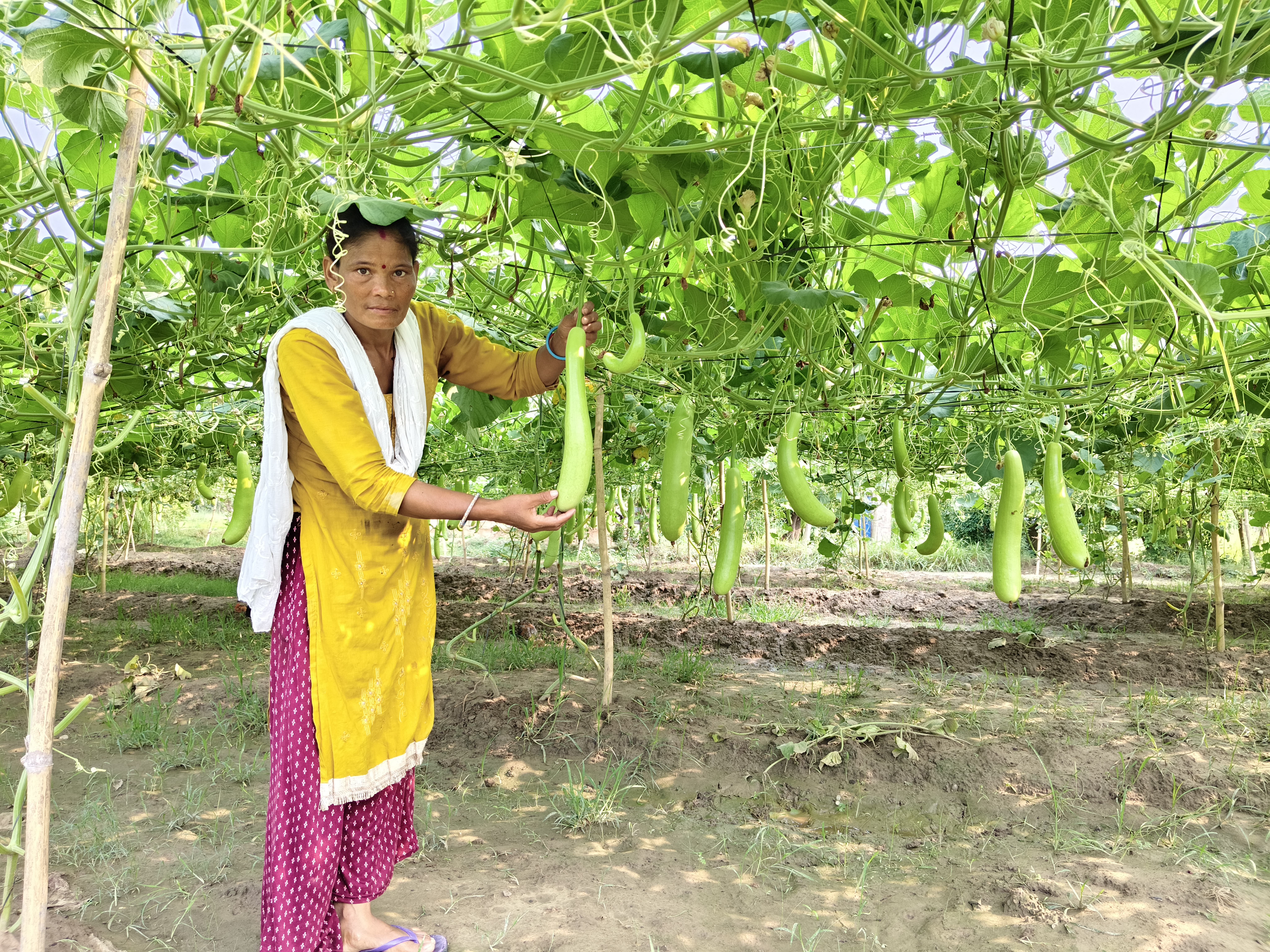
Bhagirathi Rana (35), a resident of Shuklaphanta Municipality - 4, lives with her husband and three children. With only basic literacy and limited livelihood opportunities, she previously belonged to a marginalized farming family struggling to meet daily needs through subsistence agriculture. Her journey today reflects a significant transformation with enhanced skills, increased confidence, and growing economic independence through the Skill Up project implemented by CEAPRED in partnership with Welthungerhilfe (WHH).
Before the intervention, Bhagirathi's life was marked by uncertainty. Her family relied on traditional farming from just one kattha of land and her husband's irregular construction wages - neither of which could consistently meet household needs. Lacking confidence, she rarely participated in community activities and had very limited interaction beyond her family.
Her turning point came when she joined the Trishakti Farmers Field School under the Skill Up project. Through hands-on sessions, she gained practical knowledge in organic farming practices, including the preparation and use of Bokashi manure, liquid fertilizers, pit composting, climate-smart nursery management, and plastic tunnel farming.
With quality seeds, bio-pesticides, and inputs support from the project, she turned learning into action. Nutrition awareness sessions further helped her improve her family’s diet. Her confidence grew significantly after participating in the Vegetable Enterprise Incubation Program at Madi Prangarik Krishi Farm in Chitwan. There, she gained hands-on skills in modern production, pest management, irrigation, and post-harvest handling. After returning from incubation program, she adopted these practices on her farm and began sharing them with fellow farmers.
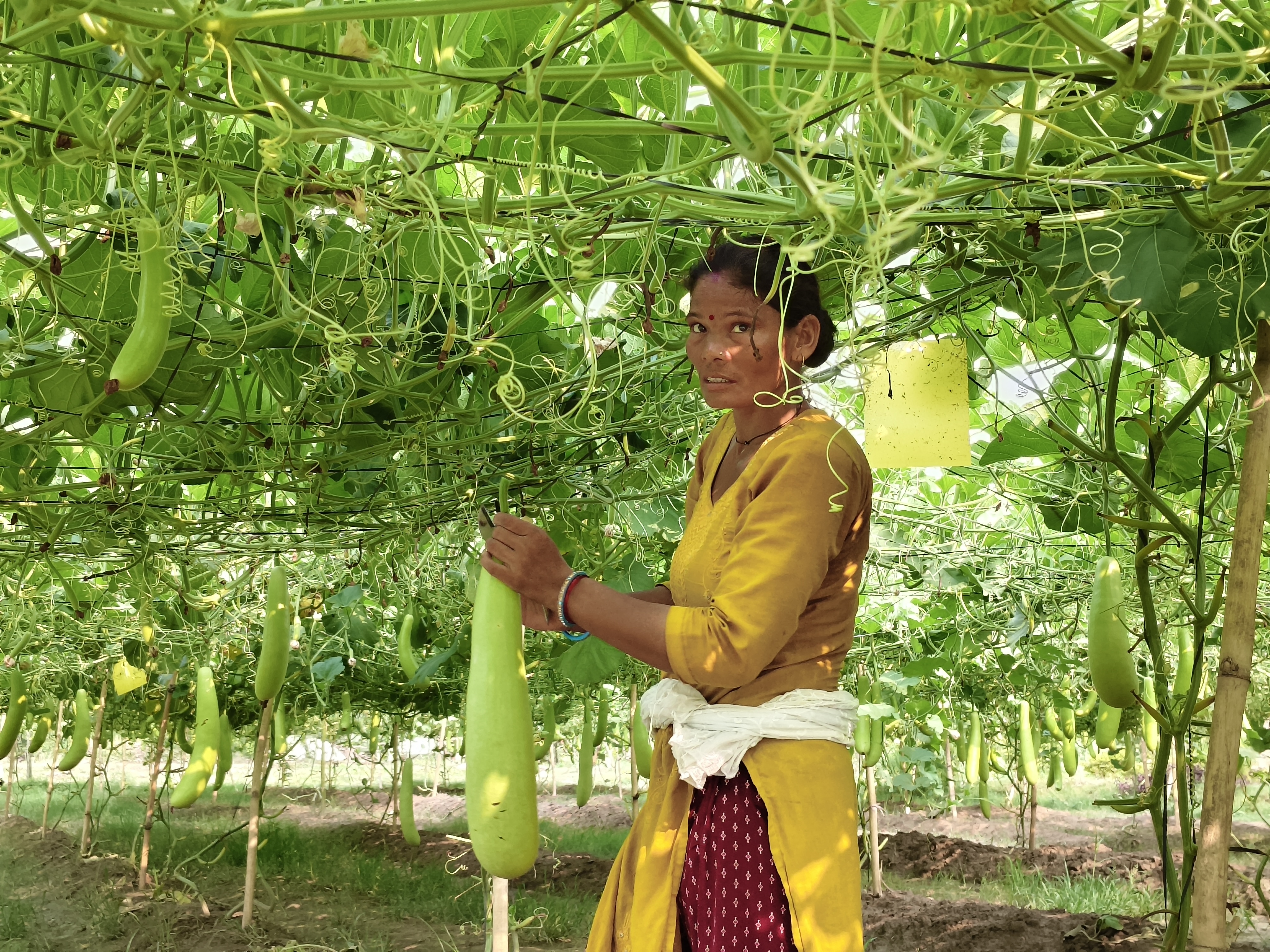 Today, Bhagirathi has expanded her farm from 1 to 4 katthas, fully switching from chemical to organic methods. Her farm, now recognized as a Climate-Smart Learning Center, serves as a demo site for the community. "I learned to use local resources through composting and mulching - this cut costs and made my income more stable," she says.
During the last winter season alone, she earned NPR 40,000 from cucumbers and NPR 50,000 from bitter gourd. Her success encouraged her husband to shift from wage labor to full-time farming, and together they now manage the farm as a family enterprise. Her household enjoys better nutrition and food security.
Bhagirathi now directly coordinates with the municipal agriculture office - a step she once found challenging. "I used to hesitate to speak," she recalls. "Now I ask questions and make decisions for my farm." Her vision is to achieve full self-reliance and inspire other women in her community. "If I can do it, other women can too," she affirms.
“From depending on irregular wages to earning NPR 90,000 in a season, I now have financial independence, a voice in my community, and my husband as my farming partner," she happily reflects.
Story & Photo: Manju Joshi
