

From Training to Enterprise: Strengthening Youth Entrepreneurs through Vegetable Enterprise Incubation
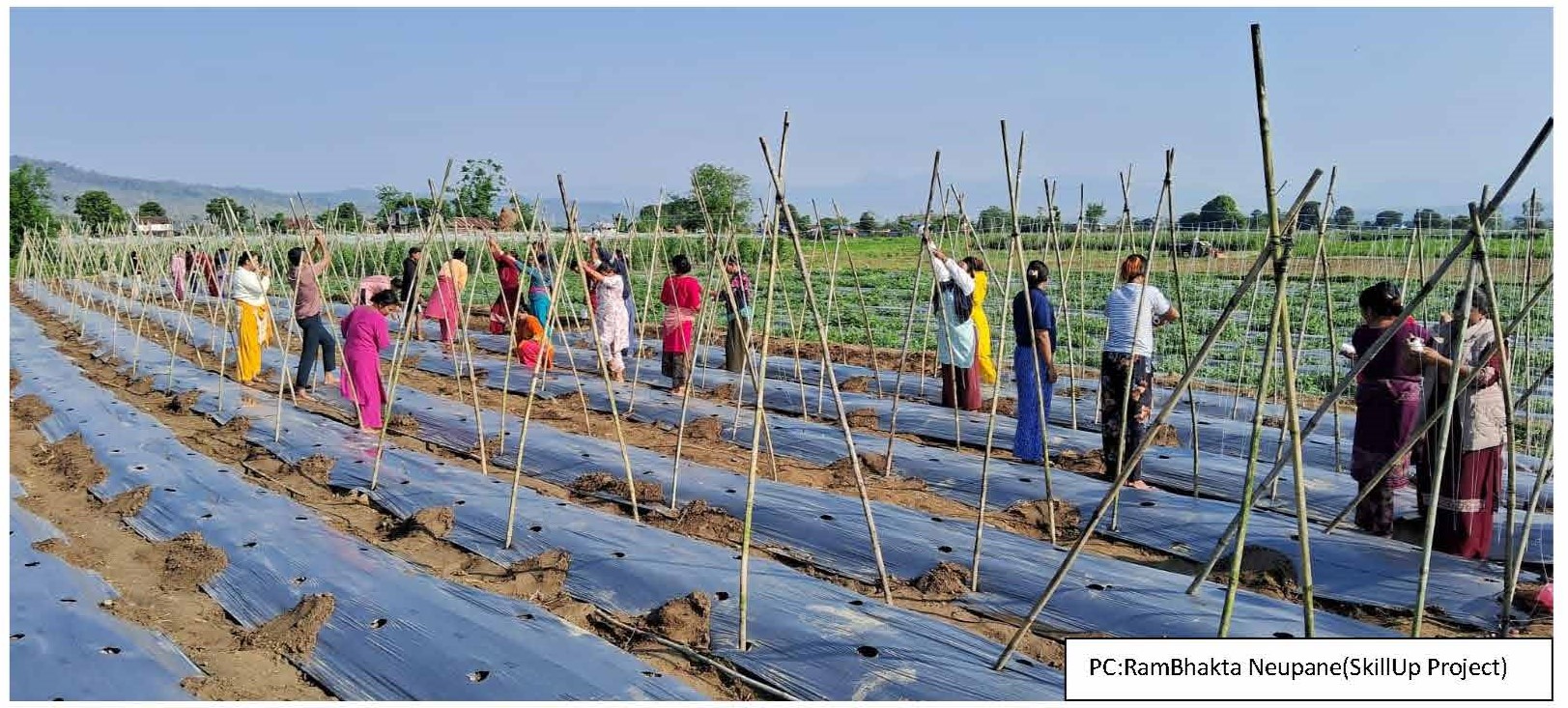
Staking practice
A seven-day residential incubation training on vegetable enterprise development was conducted from April 5–11, 2026, at Madi Prangarik Krishi Farm Tatha Anusandhan Kendra Pvt. Ltd. under the Skill Up project implemented by CEAPRED in partnership with Welthungerhilfe. The programme was designed as a practical, field-based learning phase following foundational training and aimed at strengthening participants’ readiness for vegetable-based entrepreneurship.
A total of 35 emerging farmers from Surkhet district participated in the incubation. Of them, 17 had previously completed a 60-day theoretical training programme at Shree Jana Jyoti High School, Surkhet, while 18 were engaged through Farmers’ Field Schools. Bringing these two learning pathways together, the incubation provided a structured opportunity to translate prior learning into practical, enterprise-oriented skills under real farming conditions.
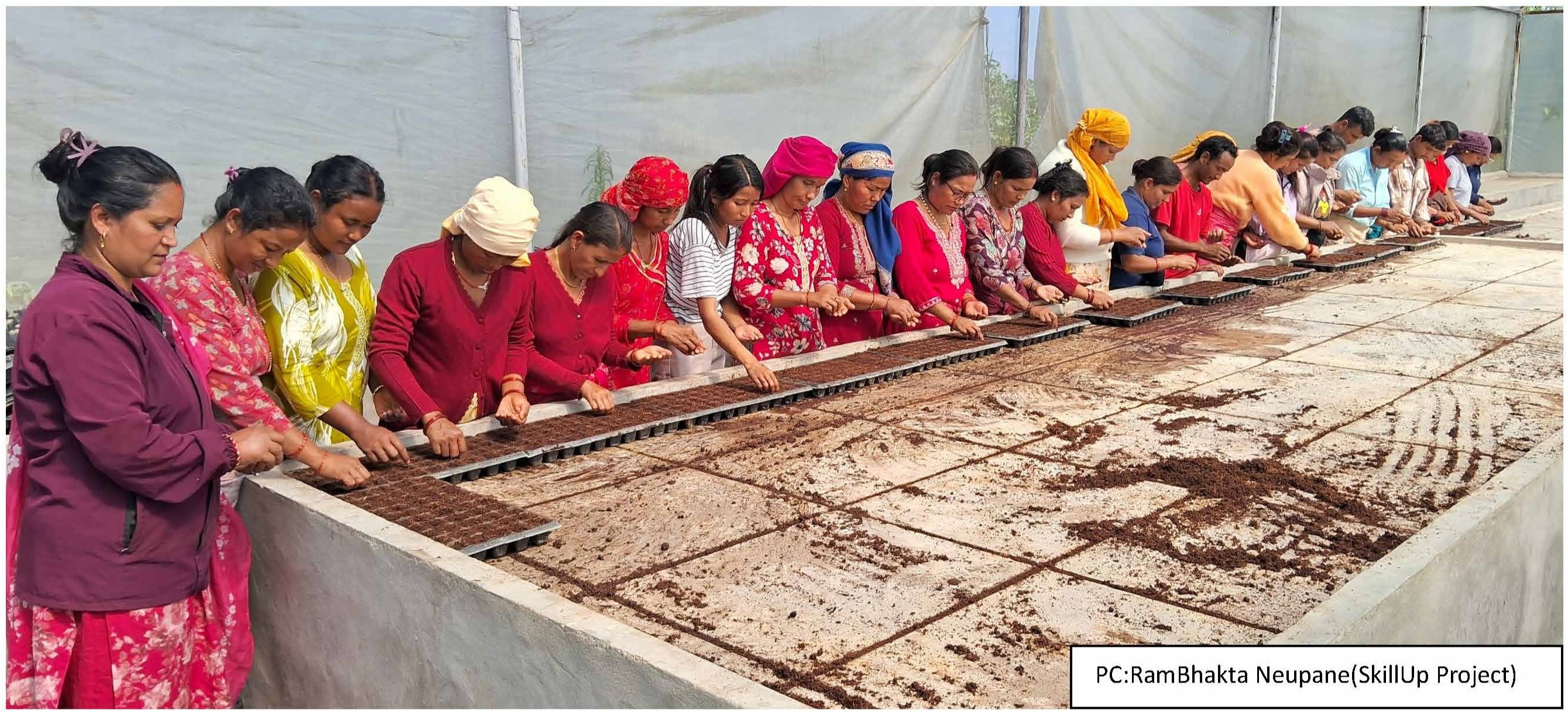
Nursery preparation training
During the residential incubation, participants received intensive hands-on training in commercial vegetable production systems. Key learning areas included nursery management, soil health improvement, irrigation techniques, and integrated pest management, along with climate-resilient and organic farming practices. Practical sessions focused on improved cultivation techniques for major vegetable crops, such as staking, pruning, mulching, and biological plant protection methods. The training also emphasized post-harvest handling, including harvesting, grading, and packaging to enhance product quality and market competitiveness. Exposure to vermicomposting and organic fertilizer production further strengthened the understanding of participants on sustainable farming practice.
The incubation programme significantly enhanced participants’ technical competencies, practical skills, and confidence in enterprise management. The residential, hands-on learning environment, supported by close mentorship, enabled participants to bridge theory and practice in commercial vegetable production. Overall, the initiative contributed to the Skill Up Project’s objective of promoting youth employability and self-employment by linking structured learning pathways with practical incubation support for the development of sustainable agri-based enterprises.
